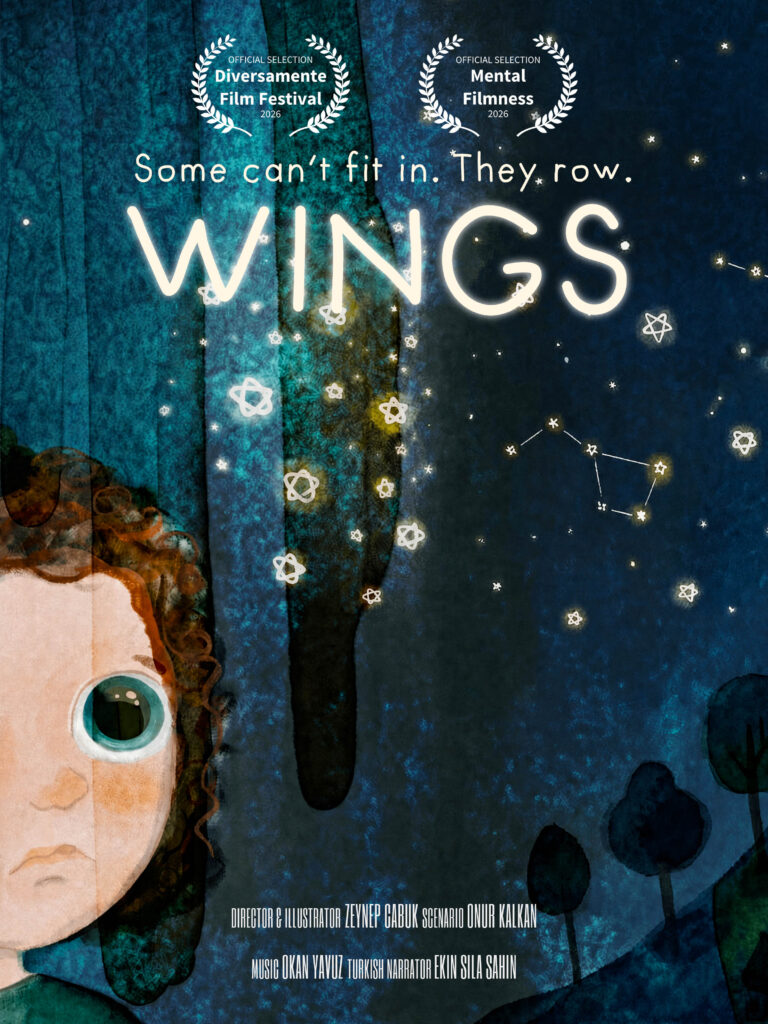
Official Selections: Mental Filmness 2026, Diversamente Film Festival 2026
Credits: Zeynep Çabuk (Director & Illustrator), Onur Kalkan (Scenario), Okan Yavuz (Music), Ekin Sıla Şahin (Turkish Narrator)
Synopsis: Turgut, a young boy on the autism spectrum living in a world of rigid patterns, is plunged into the chaotic waves of his greatest fear. In his struggle to stay afloat, he discovers that his habit of copying others is not a barrier, but a transformative key to survival and connection.
PRODUCTION & AI PIPELINE
01. CONCEPT
Procreate
Hand-drawn Assets
➔
02. AI VIDEO
Kling & Minimax Hailuo
Generative Motion
➔
03. AUDIO
Adobe Podcast AI
Voice & Original Score
➔
04. POST / EDIT
Blender VSE
Compositing & Editing
Wings: Production Pipeline
From Traditional Children's Book to AI-Powered Animated Short
01 | Canvas Extension & Aspect Ratio Adaptation
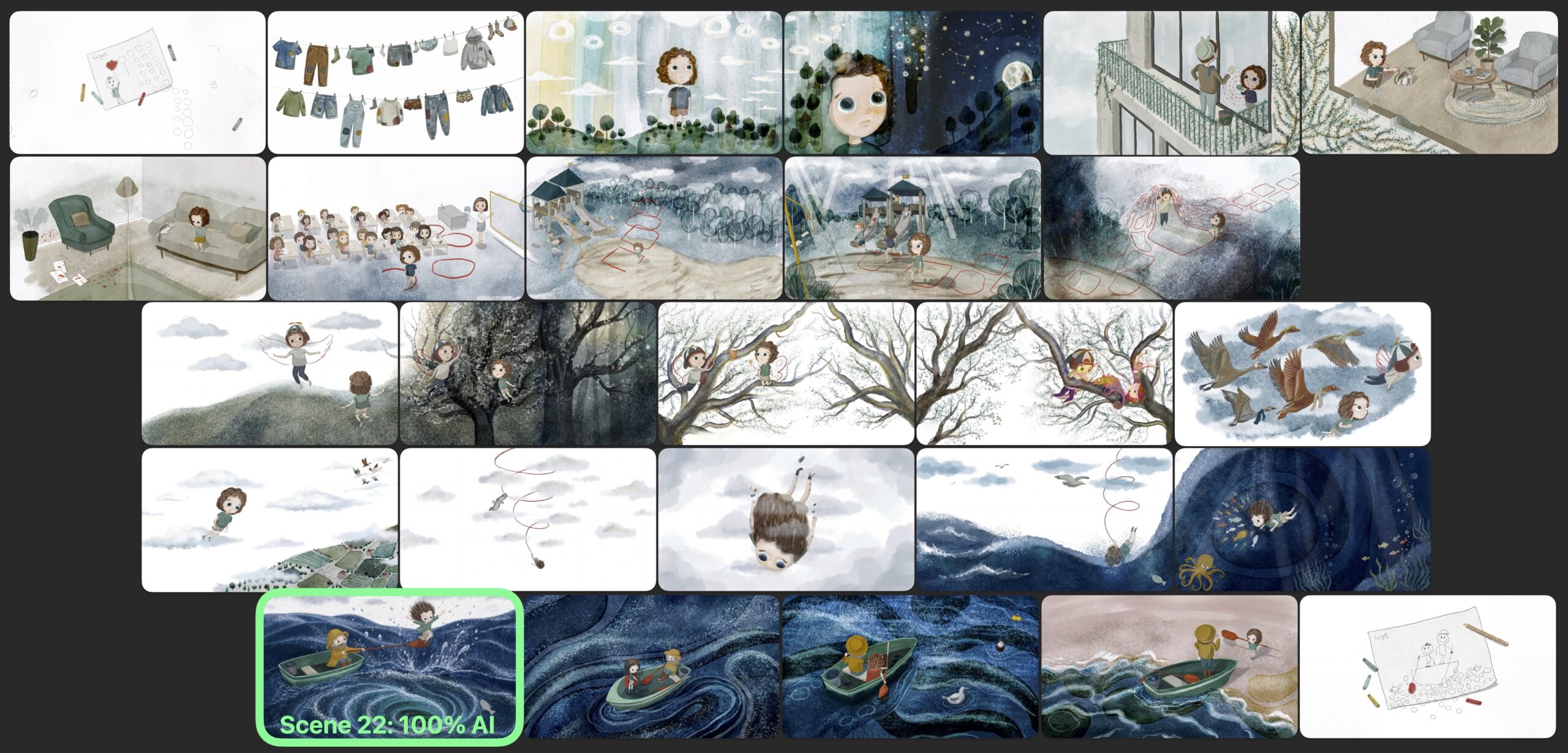
26-Scene Visual Narrative & Pipeline Strategy
The complete 26-scene storyboard for Wings. To bring this project to life efficiently, scenes 01–21 and 23–26 were adapted from original children’s book illustrations into 16:9 cinematic frames using AI outpainting, while Scene 22 was fully generated via AI to handle complex action and scale.
Scenes 01–21 & 23–26: Original book illustrations extended to 16:9 aspect ratio via AI Outpainting. Scene 22: 100% AI-generated keyframe, style-conditioned using reference illustrations.
02 | Canvas Extension & Aspect Ratio Adaptation
Adapting Book Keyframes into 16:9 Cinematic Frames
To adapt traditional hand-drawn children’s book illustrations into 16:9 animation frames without re-drawing backgrounds, I used generative AI outpainting. By anchoring the original watercolor keyframes at the center, AI extended the canvas borders—preserving brushwork textures, lighting, and character integrity.
01. Raw Sketch
Initial rough draft & storyboarding for the book illustration.
02. Digital Illustration
Completed Procreate artwork in a traditional watercolor aesthetic.
03. 16:9 AI Extension
Final cinematic 16:9 keyframe expanded using AI outpainting.
03 | 100% AI-Generated Keyframe (Scene 22)
Directing Complex Fluid Physics via Multi-Reference Conditioning
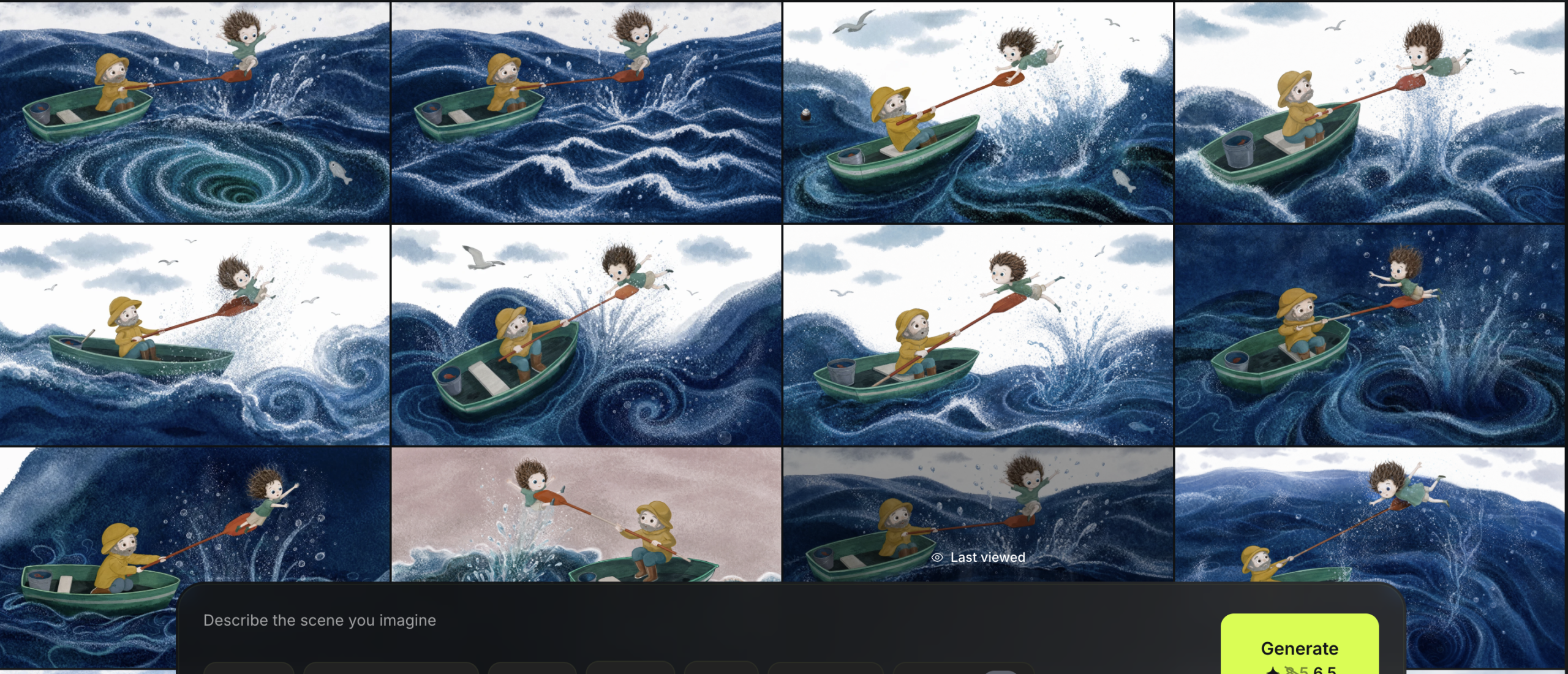
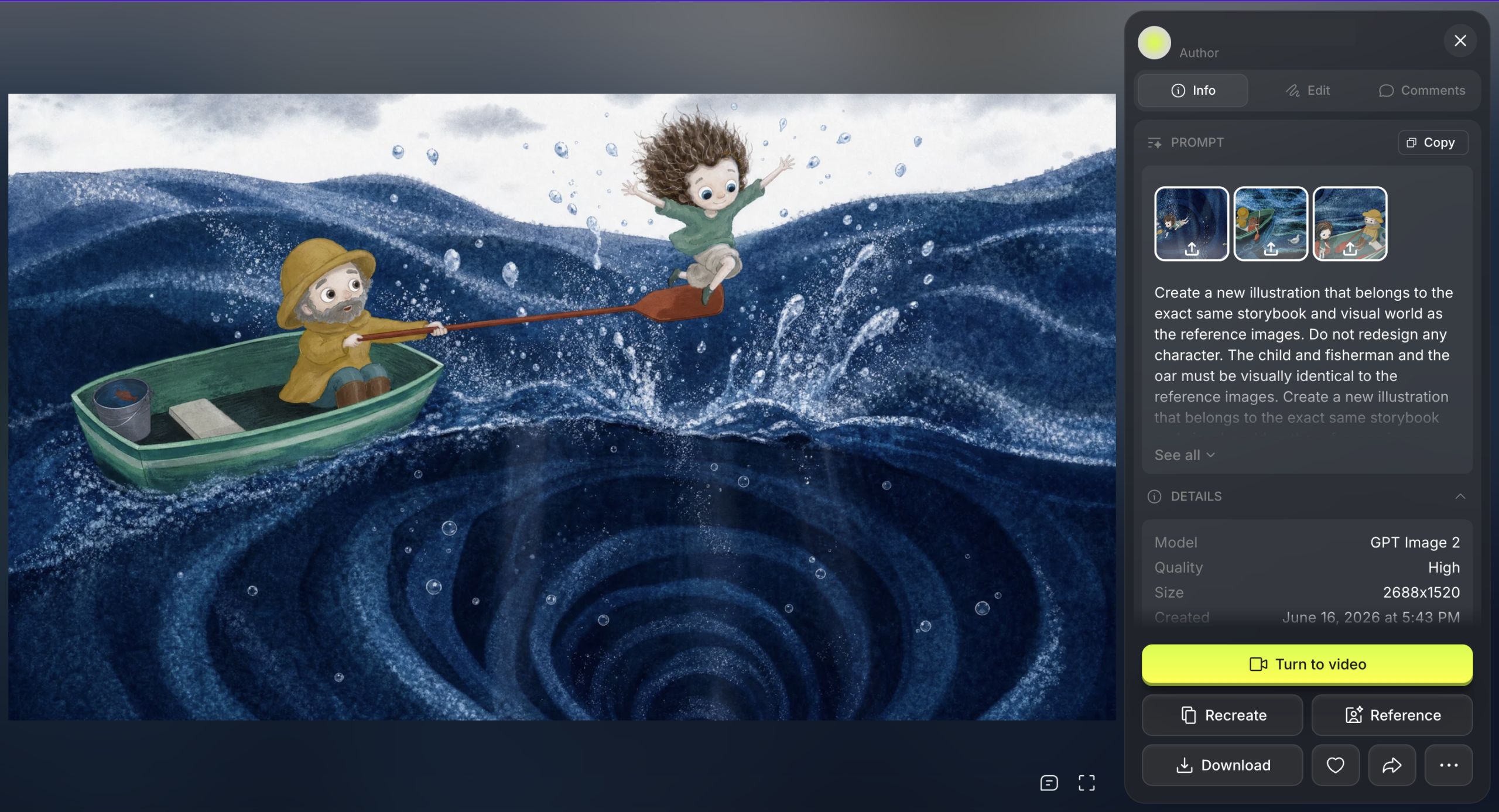
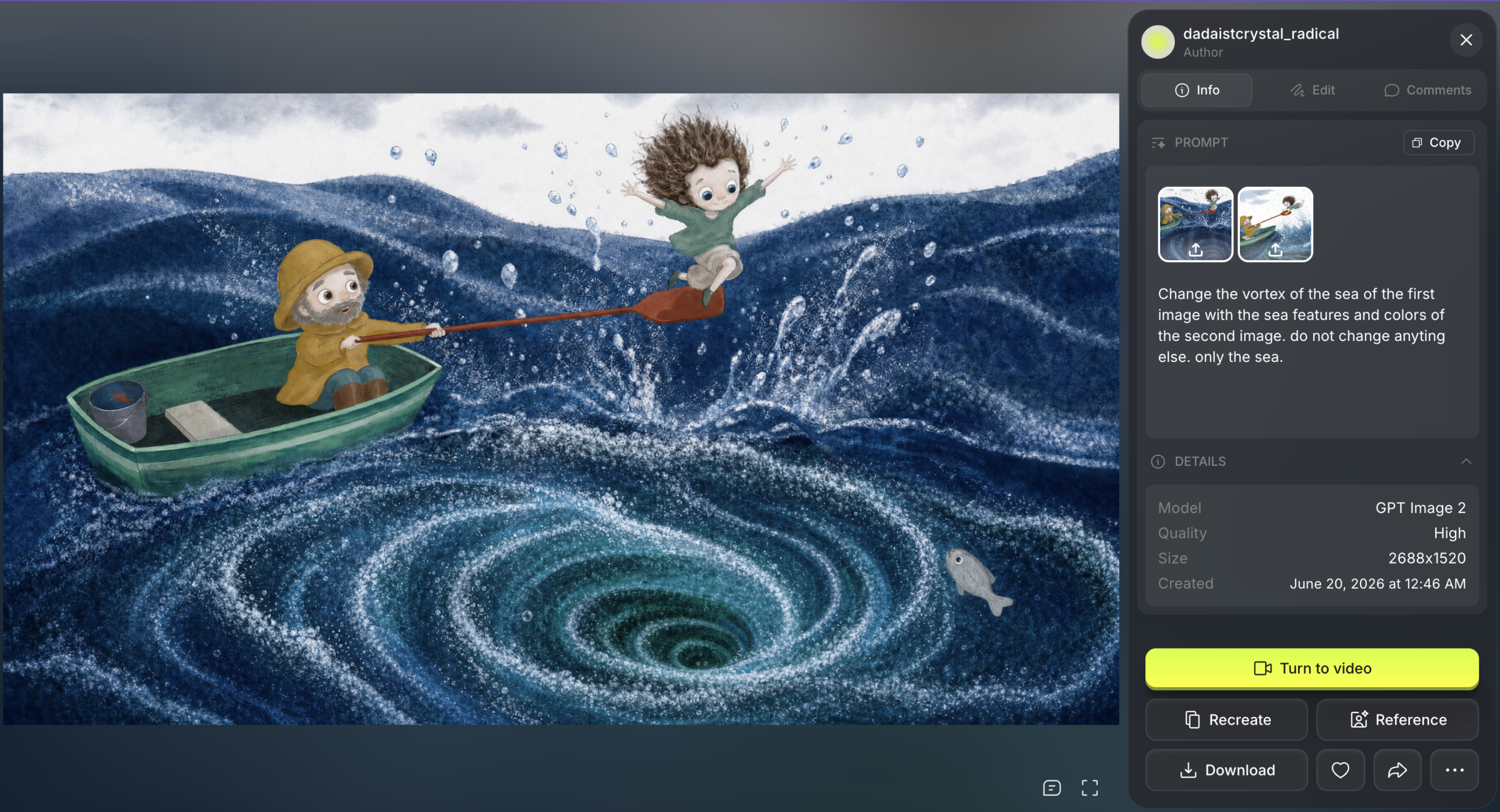
Scene 22 required dynamic water physics and a dramatic whirlpool scale that matched the rest of the film’s aesthetic. Instead of manual drawing, I directed this scene using GPT Image 2 through a 3-step multi-reference pipeline. This precise control enabled a 100% generative keyframe to achieve seamless style continuity within the 26-scene sequence before passing it to video generation.
Step 1: Generative Iteration & Exploration
Step 2: Style Conditioning & Initial Generation
Step 3: Fine-Tuning Palette & Ocean Texture
Step 1 (Generative Iteration & Exploration): Generating 12 AI iterations in Higgsfield/GPT Image 2 to explore dynamic camera angles, character proportions, and water physics for Scene 22.
Step 2 (Style Conditioning & Initial Generation): Conditioning the model using reference keyframes to lock character designs (child, fisherman, oar). Selected the strongest hero frame for composition and vortex scale.
Step 3 (Fine-Tuning Palette & Ocean Texture): Refining the water palette via Image-to-Image conditioning. Transferring the exact sea color and brushwork from a secondary reference image while keeping character features untouched.
Project I: 3D Spatial Modeling & Generative AI Pipeline
Douala International Airport Shell & Facade Design
Type: Commissioned Work & Reimagined AI Pipeline Focus: Architectural Shell Modeling, Generative Post-Production & Motion Design
Workflow: Architectural 3D Modeling (Rhinoceros 3D ) → Base Lighting & Material Rendering (VRay) → AI Image
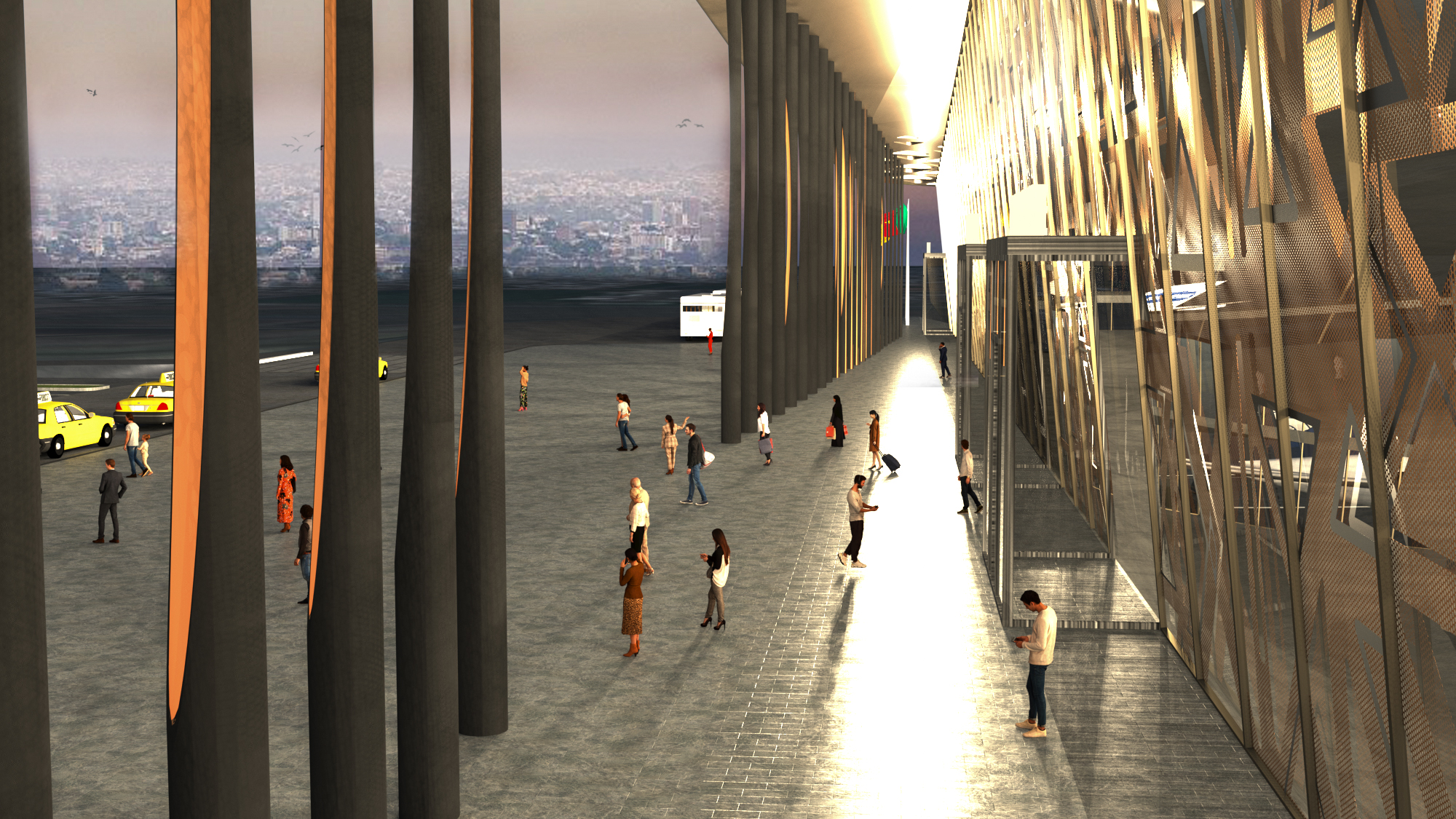
Commissioned work for the shell/façade design and visualization of Douala International Airport (Cameroon), originally developed in late 2021. This project revisits the architectural base models to explore an advanced post-production and generative animation pipeline.
STEP 01 — 3D Modeling | Software: Rhinoceros 3D | Original architectural shell and façade geometry developed as a commissioned concept design (late 2021).
STEP 02 — Base Rendering & Lighting Setup | Software: V-Ray for Rhino | Establishing camera positioning, spatial lighting, material mappings, and environmental context.
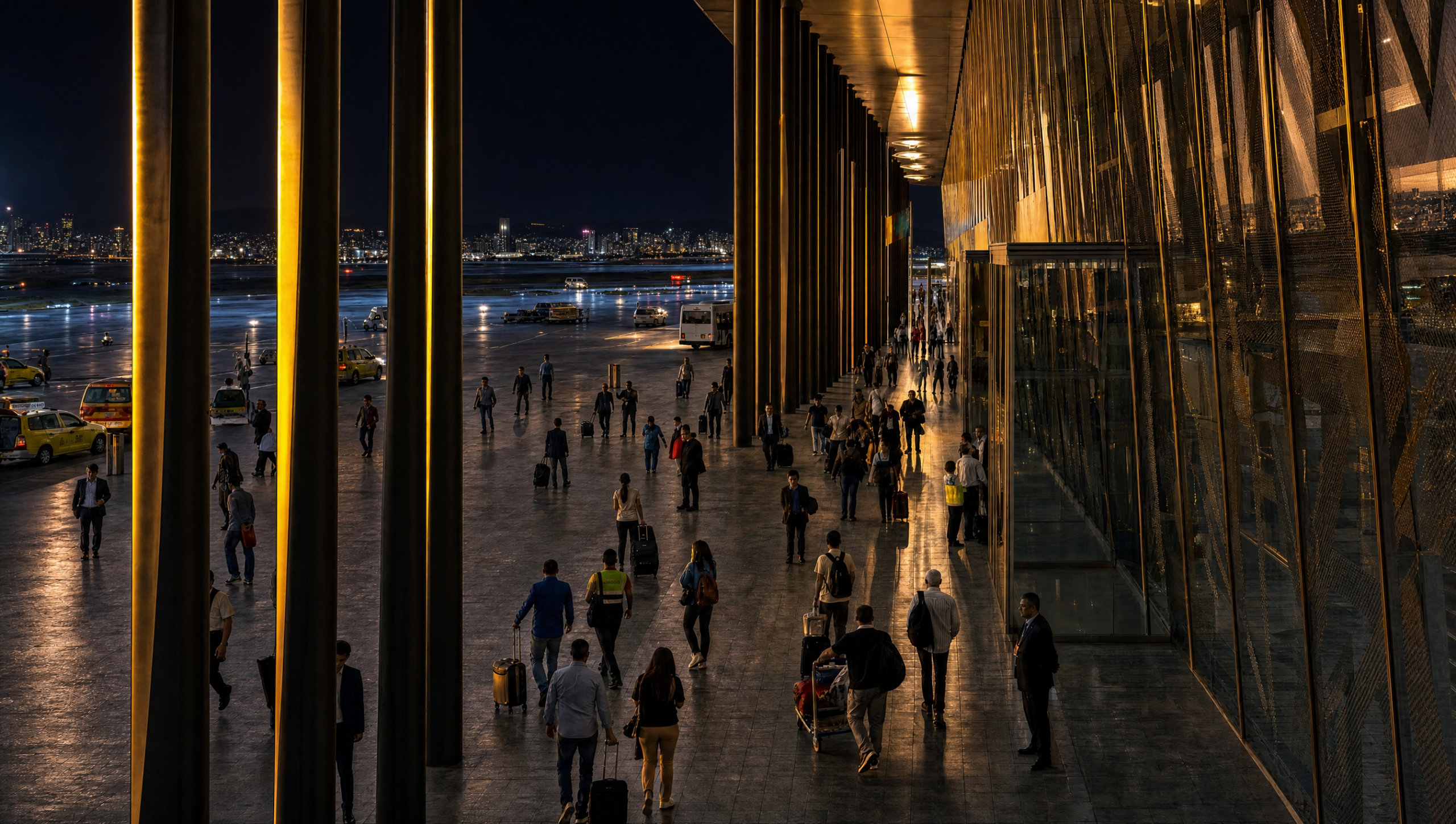
STEP 03 — Style Refinement & AI Image | Generation Tools: Higgsfield AI / GPT Image / Nano Banana Pro | Enhancing visual atmosphere, material textures, architectural details, and lighting nuances through generative AI refinement.
STEP 04 — Image-to-Video Animation | Tools: Kling AI | Translating refined architectural stills into cinematic motion and dynamic spatial video sequence.
Project II: Hand-Drawn Illustration, AI Motion Generation & Blender VSE
Dr. Meto: Love Doctor
Type: Commissioned Book Cover & Animated Adaptation Focus: Editorial Book Cover Design, Visual Storytelling & AI Animation Workflow: Procreate (Hand-Drawn Digital Artwork) → Generative AI Motion (MiniMax & Kling AI) → Video Compositing & Sequencing (Blender VSE)
A hybrid 2D animation blending expressive digital hand-drawn illustration with generative AI motion tools. Initial character concepts and spatial transformation layers were hand-drawn in Procreate, brought to life through controlled video generation (MiniMax & Kling AI), and final-cut compiled in Blender VSE. The piece illustrates a emotional narrative of healing, transforming a sterile clinical environment into a vibrant world of hope.
Initial raw drawing and composition work, created using Procreate.
Completed drawing.
AI-driven animation: Prompt iteration and initial motion output generated within the Higgsfield AI interface.
Post-production process using Blender VSE, sequencing the final cuts.
Project III: 3D Spatial Modeling & Hand-Drawn Hybrid Animation
Kesariani No.1 Housing/Production Complex
Workflow: 3D Base Geometry (Rhino) → Digital Line Art & Illustration (Photoshop / Procreate) → Frame-by-Frame Editing & Video Sequencing
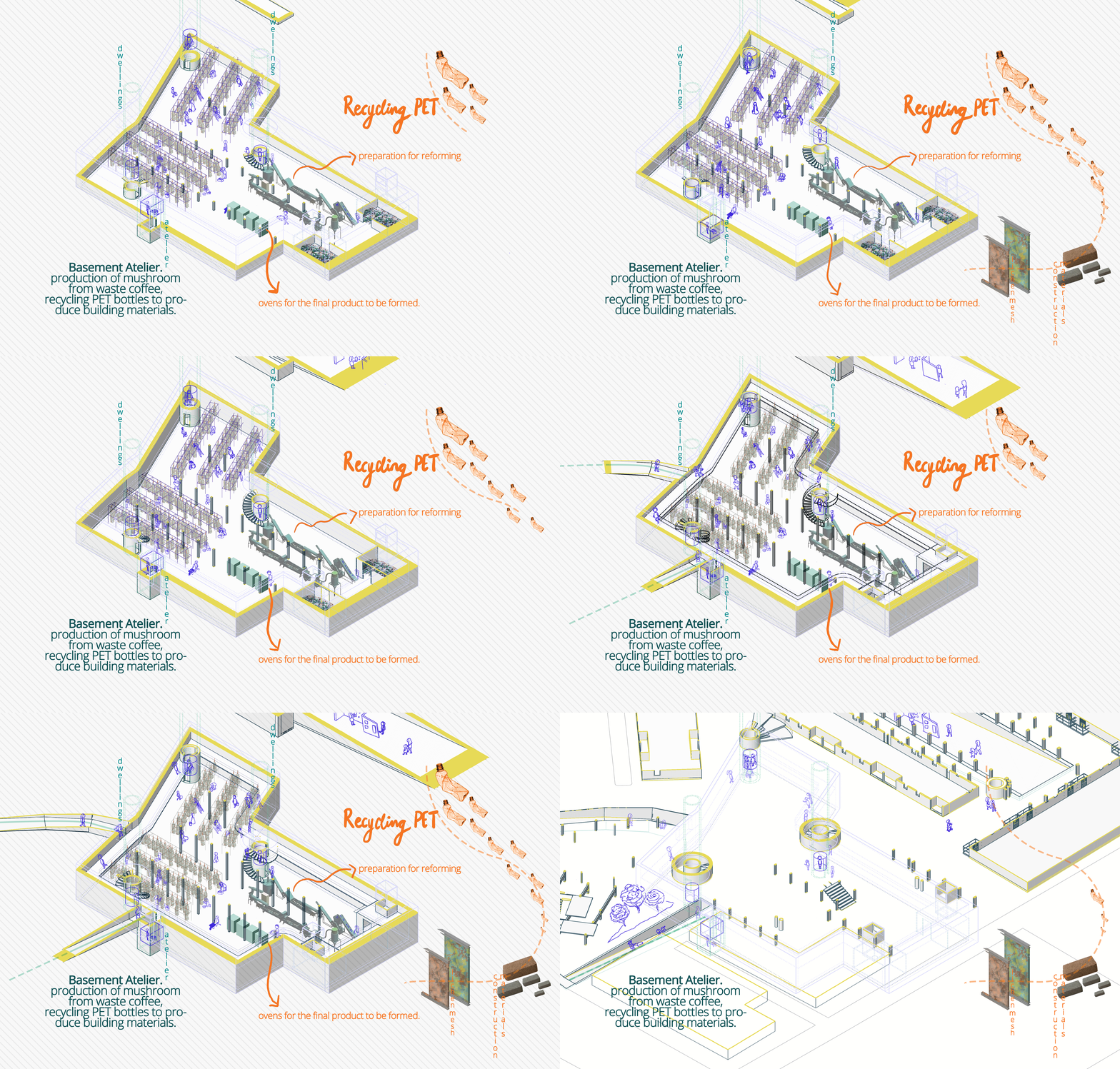
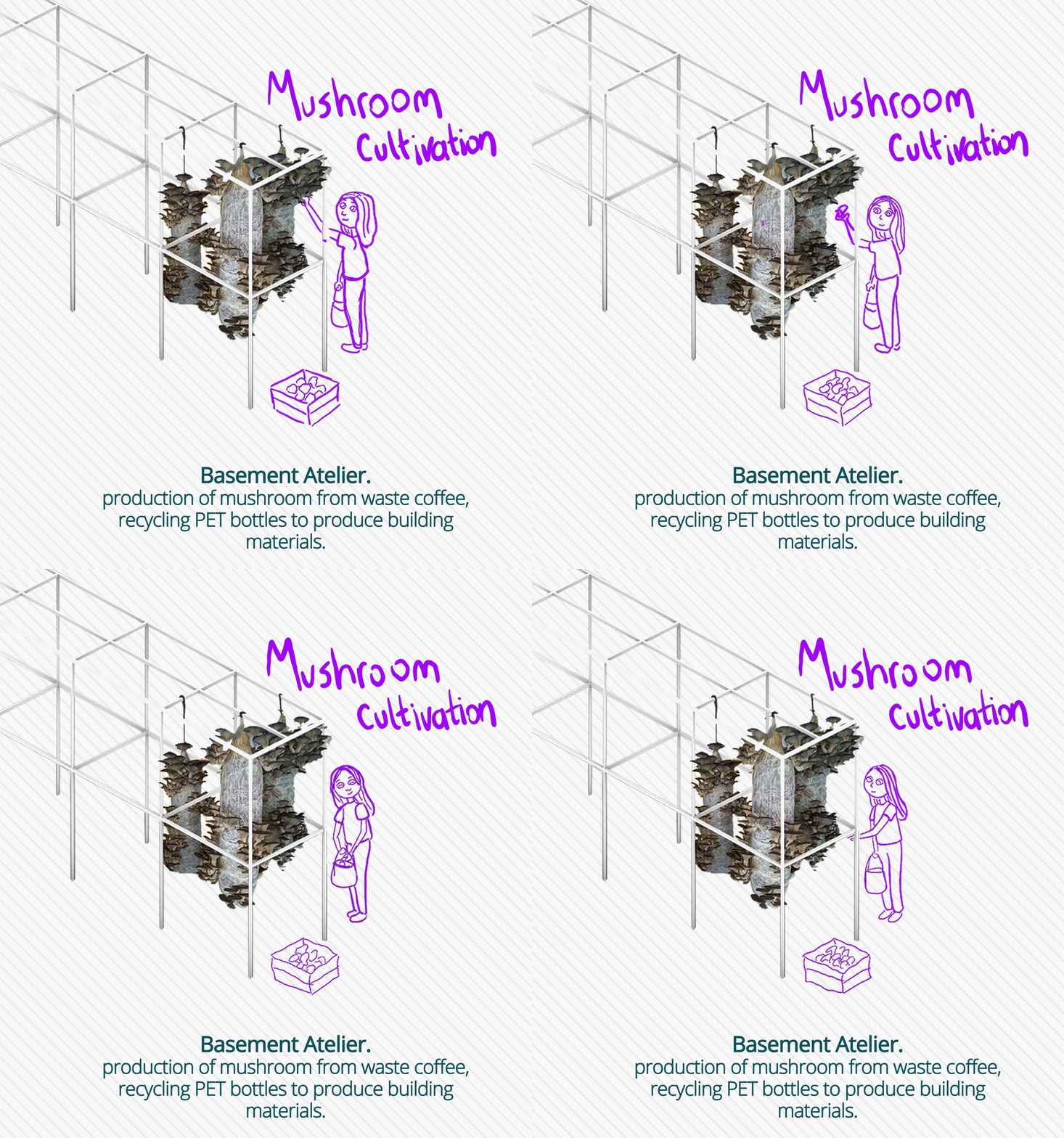
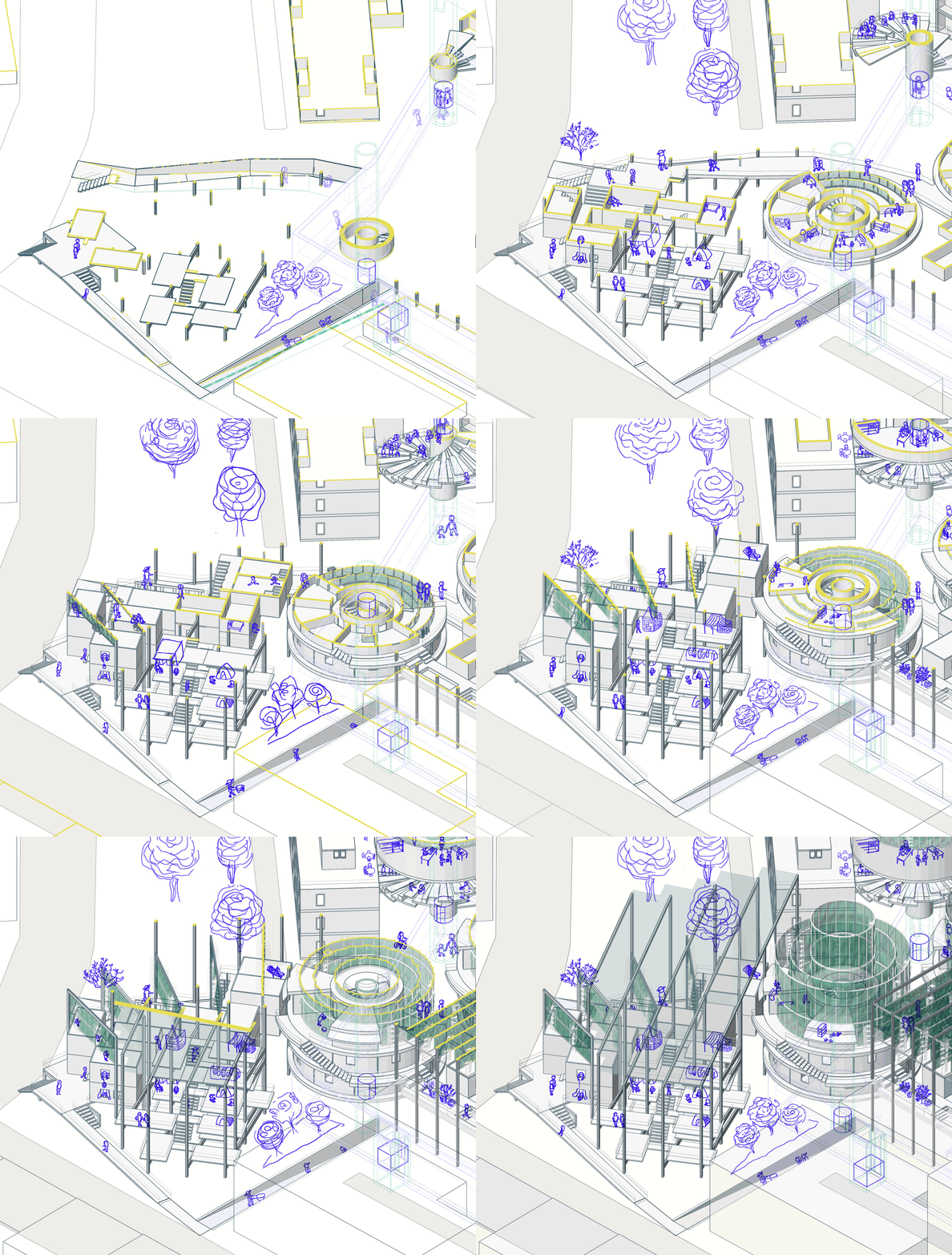
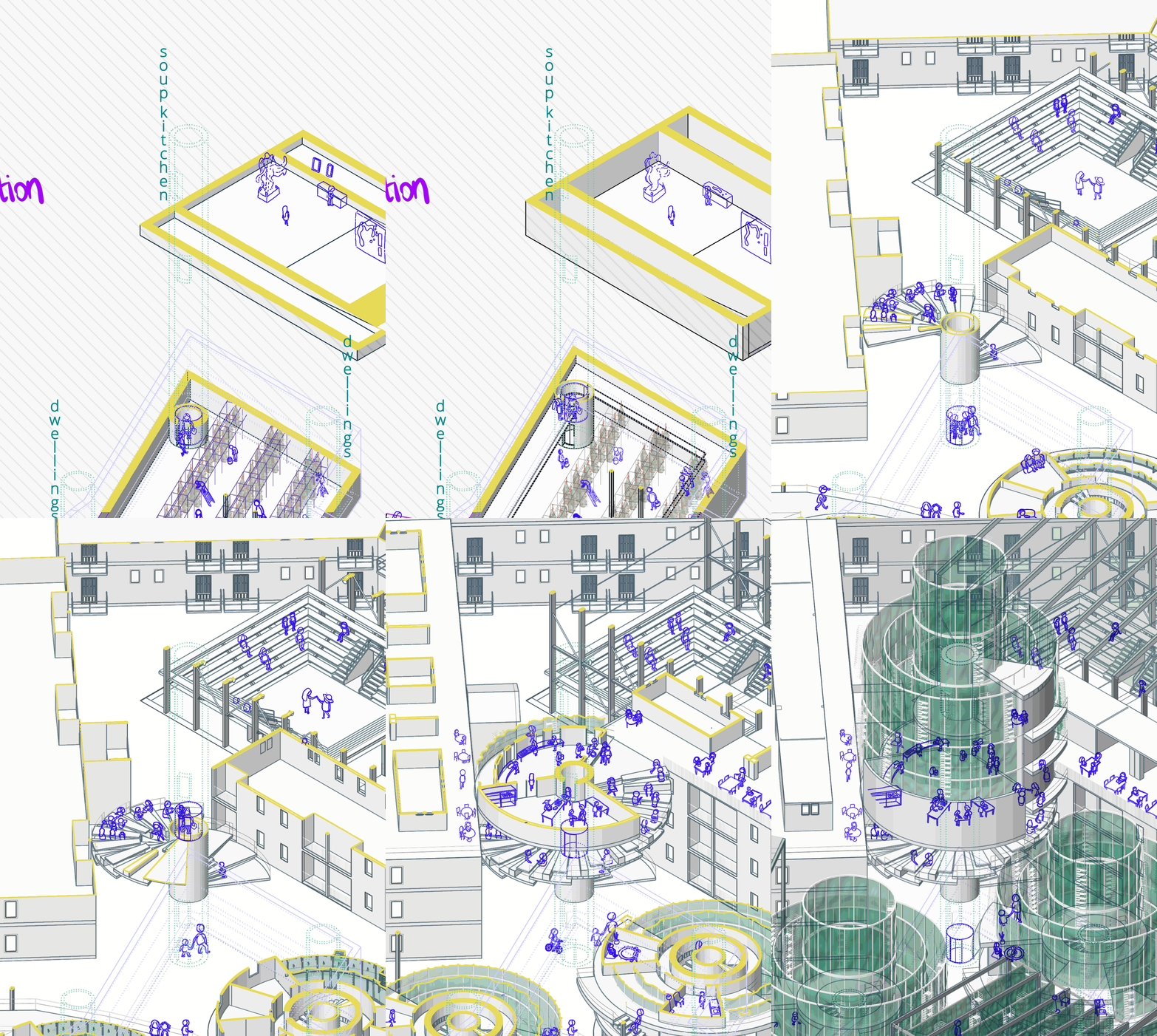
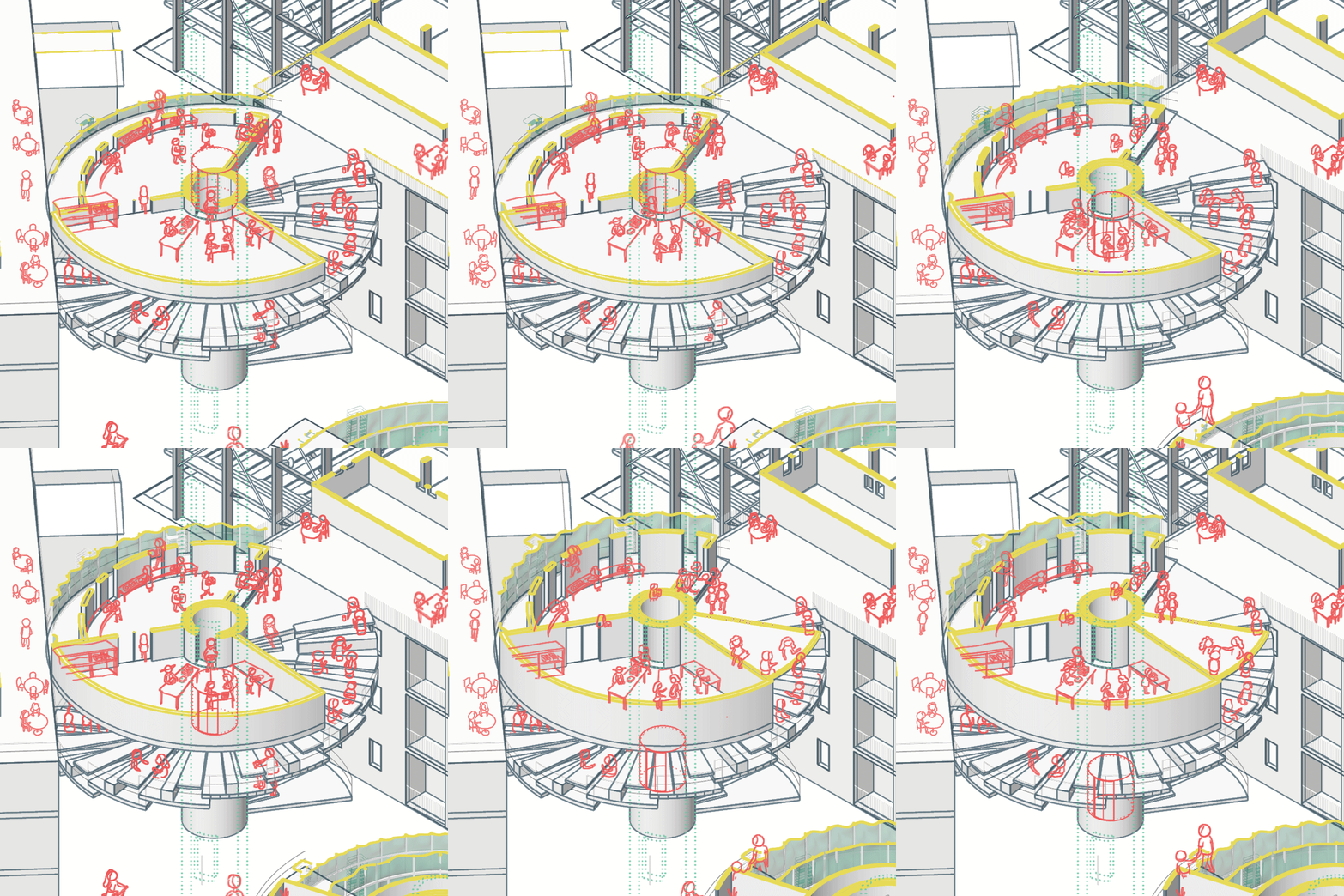
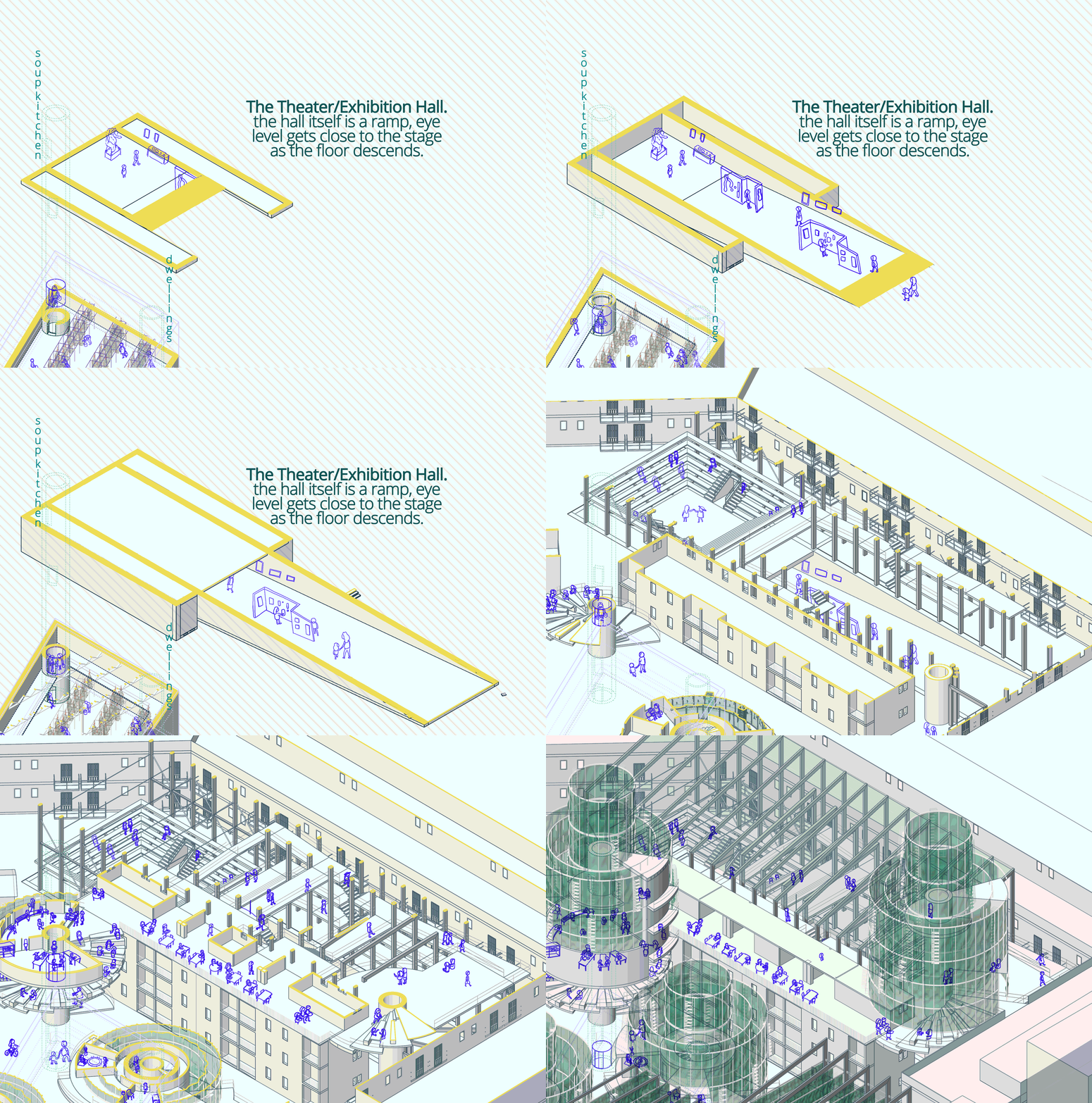
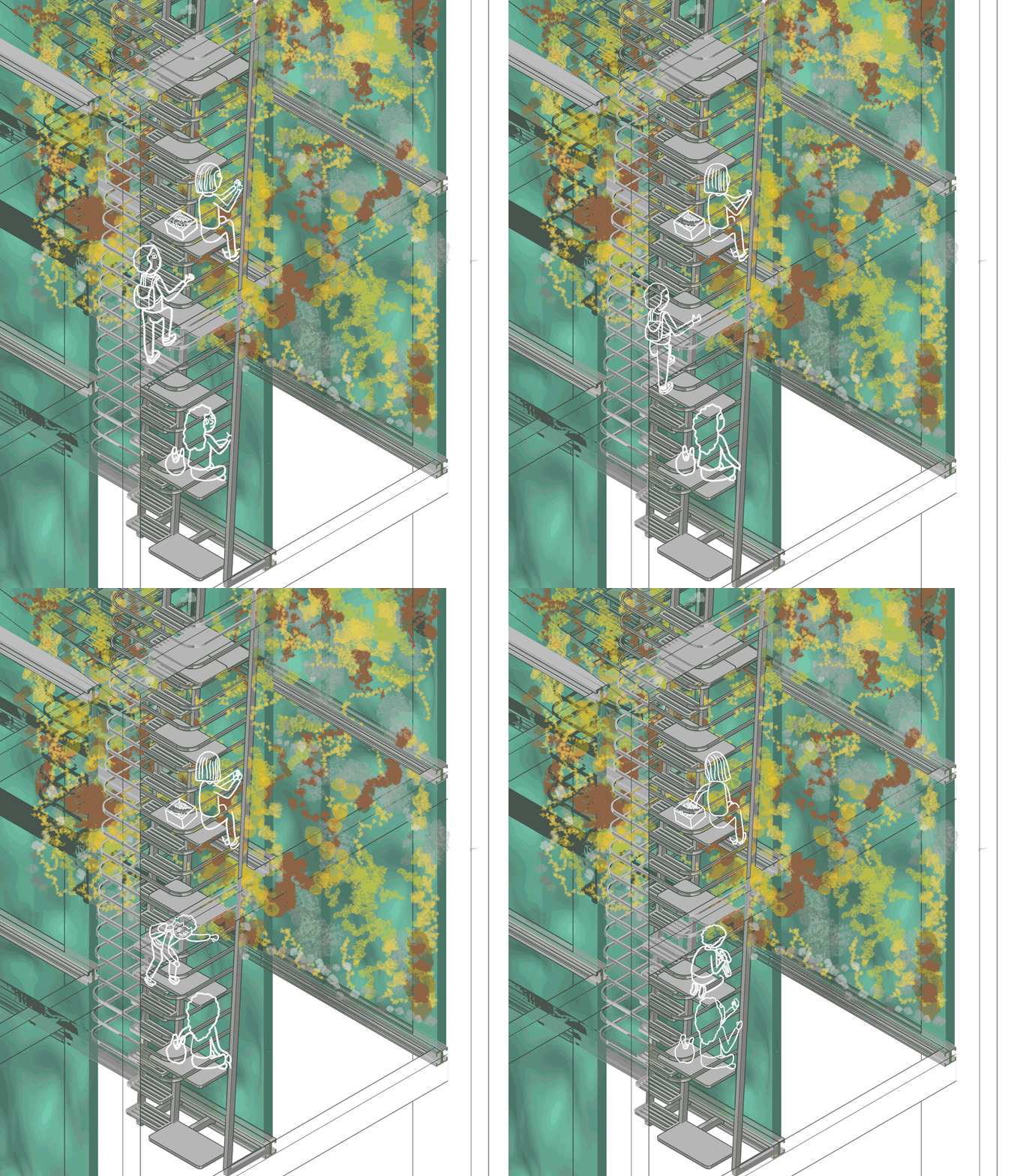
A hybrid methodology blending precise 3D base geometry with frame-by-frame digital illustration. Individual frames were hand-drawn over 3D structural references and assembled into sequential motion graphics to visualize circulation, material recycling loops, and human interactions within the architectural space.
Diagramming the spatial sequence of waste coffee mushroom cultivation and PET bottle recycling into building materials.
Hand-drawn character animation built on 3D spatial reference, capturing the human scale and harvesting activity inside the mushroom cultivation atelier.
Sequential hand-drawn character animation layered over 3D base geometry to illustrate spatial circulation and modular unit connectivity.
illustrating the spatial link between cultivation, food preparation, and communal dining areas within the complex.
illustrating the spatial link between cultivation, food preparation, and communal dining areas within the complex.
Sequential hand-drawn animation layered over 3D base geometry, illustrating the descending ramped space designed for improvised performances and audience participation.
A figure harvesting samples from the 'Lichen Gardens'. Serving both as bio-indicators of environmental health and as an edible, resilient nutrition source during times of famine, lichens reflect the project's survival and ecological strategy.
Architectural Section & Spatial Flow
A frame-by-frame animated section revealing the multi-layered life of the project—spanning from underground structures and street-level interactions to the upper levels. Hand-drawn frame by frame in Procreate and assembled in Adobe Photoshop, capturing the spatial continuity and atmosphere without AI generation.
Process: Procreate (Traditional frame-by-frame digital drawing) → Adobe Photoshop (Compositing & Frame Assembly).